
On August 14, 2005, something unimaginable happened in the sky.
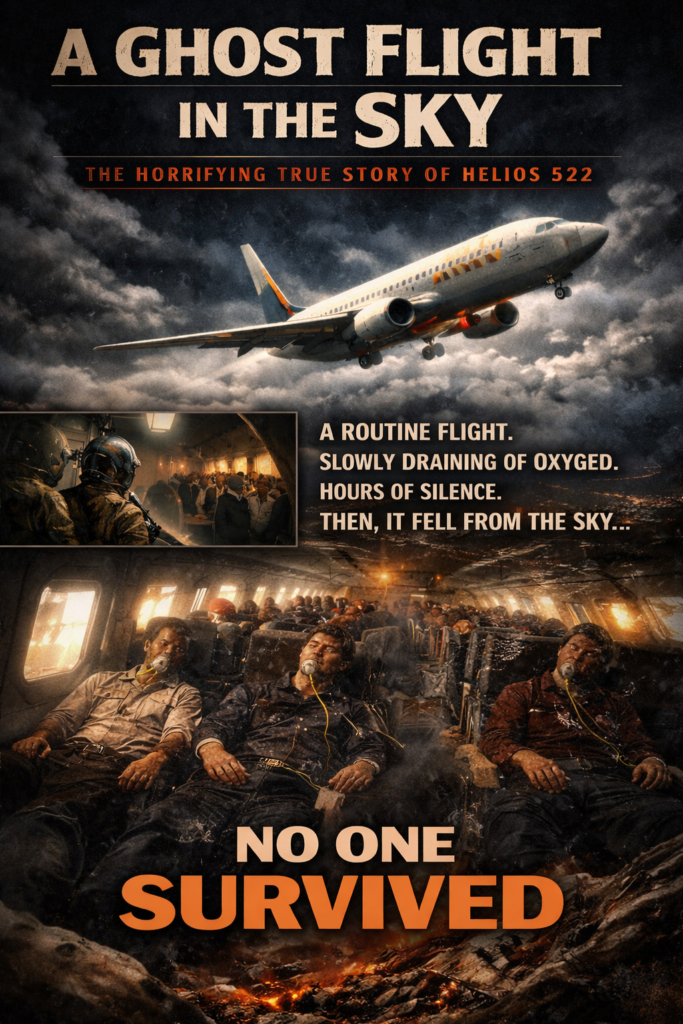
Helios Airways Flight 522 lifted off from Cyprus, bound for Prague.
A routine flight. A modern aircraft. Experienced crew.
Nothing to suggest that, within minutes, the plane had already been condemned.
The engines thundered. The aircraft climbed steadily. Autopilot engaged.
From the outside, everything looked perfect.
Inside the cabin, it was already too late.
A single, almost invisible mistake in the pressurization system began to drain the oxygen from the aircraft. Slowly. Quietly. Without drama.
Passengers felt lightheaded. Pilots struggled to focus. Words stopped making sense. Movements became heavy.
Confusion turned into silence.
No one screamed.
No one panicked.
No one realized they were dying.
One by one, every soul on board slipped into unconsciousness.
Yet the plane kept flying.
For hours, the aircraft crossed the sky on autopilot — empty of awareness, full of death — circling above Greece like a machine possessed. A ghost flight. Alive, but without life.
Fighter jets were eventually scrambled to intercept it.
What the pilots saw through the cockpit windows was horrifying beyond words: rows of passengers slumped in their seats, oxygen masks hanging uselessly, frozen faces staring into nothing.
Not a single movement.
Not a single sound.
Just silence at 34,000 feet.
When the fuel finally ran out, there was no one left to save it.
The aircraft plunged toward the earth and crashed near Athens.
Everyone on board was already gone.
What makes this tragedy so terrifying is not fire or impact —
but the calm in which it unfolded.
No explosion.
No chaos.
Just a quiet descent into oblivion.
A modern jet.
A routine flight.
One small human error.
And an entire plane lost without a single cry for help.
This story is not told to shock, but to remind us:
the deadliest dangers are often the ones you never hear coming.